
I thought I would complete all my training, from the Advanced to Dive Master, and be able to work there during the high season, but the shop and instructor were not a good fit for me. This decision to stop there and change to Bali was not really easy, as it destroyed all the well-prepared plans I had made. In Amed, I visited almost all shops to find a new dive shop for my DMT, which taught me a lot. Looking back, it was the best that could have happened to me.
Coming from corporate work, including sales presentations, I had already seen both very poorly run and very well-run shops before I even finished my DMT. During my IDC time on the Gilis,I even conducted a small experiment on how to choose a dive shop based on intuition. Here is the advice I always give to my students.

Why sales & service reveal a dive shop’s true character
My advice to all my students: The way the dive shop treats you during the sales pitch is the way they will treat you underwater (and their employees, too, by the way). Here is what you need to know:
Diving is also selling – and that’s okay
It might not look or feel like it, because as a customer, you are looking for something fun to do on your holiday, and dive shops often have a casual atmosphere. However, keep in mind that every contact, personal or via email, WhatsApp, or even Instagram, is a sales pitch for the dive shop. Keep in mind that, no matter how casual and fun everything looks, you are a paying customer and should not only be treated as such, but also receive the best service for your money.
Personally, I love visiting the various dive shops at a diving destination, getting advice (or not), and feeling the vibe – the general atmosphere, the way they treat their customers, if they invest time and answer all questions. This is what I did in Amed, and this is what I asked a friend to do for my experiment in the Gilis. During my corporate time, I learned that trust closes the pitch, not the price. Whether you buy a car or dive, listen to your intuition.
Balancing price and safety
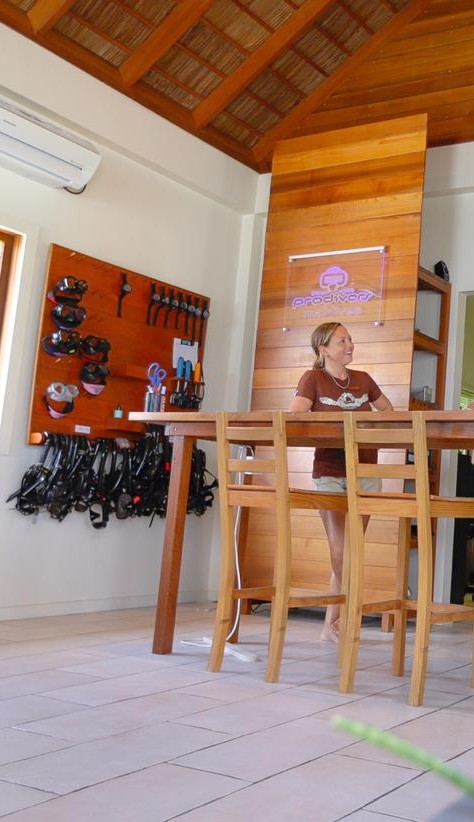
My very personal and possibly controversial opinion: The diving industry is far too cheap, which affects the income of dive professionals like myself. Diving is still a dangerous sport – no matter what the media tries to tell you! We teach this high-risk sport in a 3-day open water course that trains students to dive safely with another certified (non-professional) diver. It’s an intensive mix of theory and practice – improper training could lead to serious accidents or even death.
Just keep in mind that if the price is significantly below the average for the area, the dive shop will have to cut costs on something, and ultimately, you will have to decide for yourself what your priority is. Please also bear in mind that diving is generally a costly sport. If you don’t have the money for a course, you can do a so-called trial dive as often as you like without a diving course.
Good quality diving means small groups (max. 4 students per instructor), well-maintained equipment, and the ability to respond to individual students. Larger groups are easier to organise from the dive shop POV, cause they only need to schedule 1 instructor, but it also means less time for the individual. Poorly maintained equipment saves the dive shop time and money, but increases the risk to divers underwater.

Equipment quality and customer care
The dive equipment should be in good working condition, and the tanks should be filled to 200bar. It´s designed to be used for years; if the overall condition is good, this is a sign that the equipment is well-maintained. A car can have scratches, but with a well-maintained engine, it can run for years.
You should feel comfortable and safe with your guide or instructor, receive clear dive briefings, reasonable responses to questions, quality training in courses, and have an overall positive experience. If you’re not satisfied with the service you’re paying for, you are allowed to address this; nice and friendly is, of course, the best way. Equipment parts can and should be replaced if needed, and even if you and your guide/instructor don´t fit, a solution can usually be found with a good shop. We are all human; mistakes can happen, or personalities just don´t fit.
Just keep in mind that you are not entitled to receive a discount cause you pay for the invested time of your guide/instructor. A given discount can even affect their payment. Some customers think that poor visibility, not fulfilled enjoyment or expectations, or even bad weather are reasons to complain and ask for discounts – it´s not. Diving is a sport that takes place amidst nature. That is what makes it so charming. However, we cannot influence nature, and therefore, there is no reason to expect a discount or a reduction in costs.

How to read dive shop reviews the right way
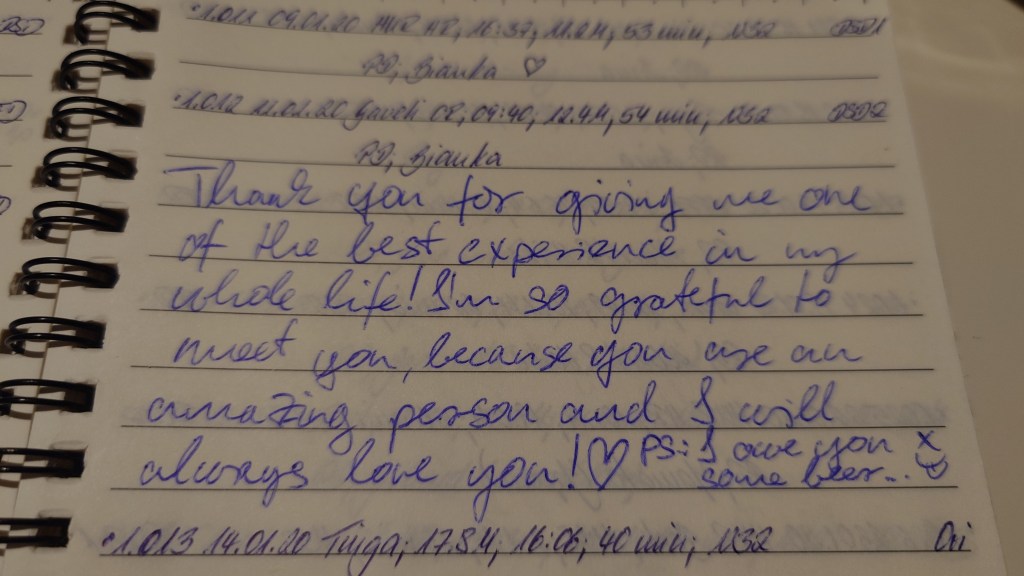
We all rely on reviews, whether on Google, TripAdvisor, or other platforms. This is generally a good idea, but it should be done correctly, especially in the dive industry, where it´s fairly easy to get good reviews. If the dive site is good, the customers are already satisfied. Since all customers are on vacation and therefore in a good mood anyway, everything else may be unimportant. I haven´t seen it firsthand, but I know professionals who worked in dive shops who pay or spoil customers for 5* reviews.
For example, a review for a trial dive will usually be positive, because breathing underwater for the first time is such an incredible experience that it alone leads to euphoria and therefore a good rating. In addition, first from a professional diver level onwards, we learn the standards of the organisations. Therefore, it’s pretty challenging to receive a bad rating, which is justified. I personally believe that only diving professionals can provide accurate reviews about dive shops, as they possess the relevant background information. If you come across such reviews, be sure to read them!
How to interpret reviews without being misled
Because it’s so easy to get good reviews, I personally look at the bad reviews of dive shops first. Not because I necessarily want to know what went wrong (of course, I do), but to check whether the statements can be justified and how the shop responded.
I’m sure we’re all familiar with reviews of hotels in which customers complain that the waves were too loud or the sand was not white enough, and there are also such reviews for dive shops. For the dive shops, it’s essential to consider the services they offer. You pay for the dive course, not the certification. You pay for the time, not for good weather, good visibility, or a calm sea. You should therefore be able to rule out this type of review using good common sense.
If there are legitimate negative reviews, I examine how the shop has responded to them. Suppose the response is offensive or even abusive. In that case, I personally rule out this dive shop as an option for myself, because that’s an indicator of how they treat their customers in general. Do I want to risk getting into an argument if something is wrong? No. If the response is respectful and professional, and an attempt is made to improve the situation, this is a sign of a professional approach to customer service.
I’ve worked as a medical assistant, in IT support, as an IT project manager, and as an IT customer quality manager. I can’t count the number of times I’ve had angry customers on the phone or in person. You can’t allow yourself to respond emotionally and abruptly. By which I don’t mean putting up with everything. But especially when it comes to posting a public answer on the Internet, every shop owner or manager should have enough control not to reply abusively. If this does happen, I don’t want to imagine how the same scene would have played out face-to-face.
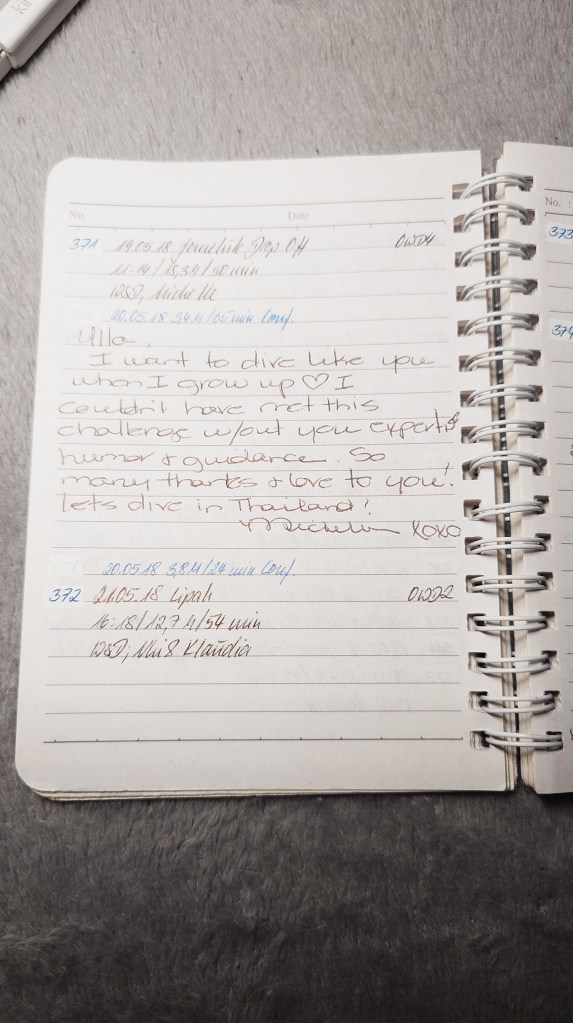
Afterwards, I focus on the positive reviews and which parts customers emphasise. Do they only mention the dive sites or also the good customer service, sales pitch, professionalism, or equipment? These are all indications of well-run dive shops. The timing of the review is also interesting. Staff can change frequently. Recurring names are therefore an indication of long-lasting staff, which speaks in favour of the shop.
Why and how you should leave a review
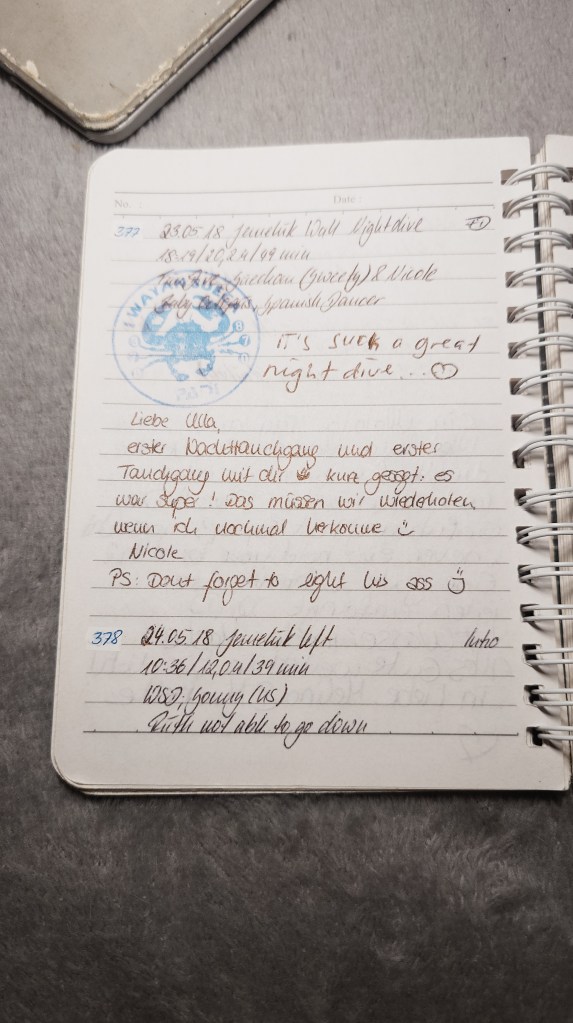
We are all happy, both as a shop and as guides/instructors, about good reviews. Personally, I am also a great advocate of verbal feedback. Especially when it comes to criticism. I know I can help any shop with a good review, especially as a diving professional, and I’m happy to do so. However, I would only write a bad review after speaking with management personally and receiving no response. I think this is true not only in the diving industry, but everywhere.
As an example from my last vacation: The staff member who handled my check-in seemed completely unmotivated and uninterested—no smile, no engagement, nothing. My decision to dive with this shop was already made, but if it hadn’t been, I likely would have left. I later learned that others had the same impression and even mentioned this behaviour in Google reviews.
After my dives, I spoke privately with the general manager to share my feedback directly rather than post it online. He listened calmly, thanked me, and asked about the dives, which made me feel my criticism was taken seriously. Whether anything changes remains to be seen, but I thought it was better to address it this way and didn´t feel the urge to post something negative online to damage the shop even more than this employee had probably already done.
What a dive shop’s website can tell you
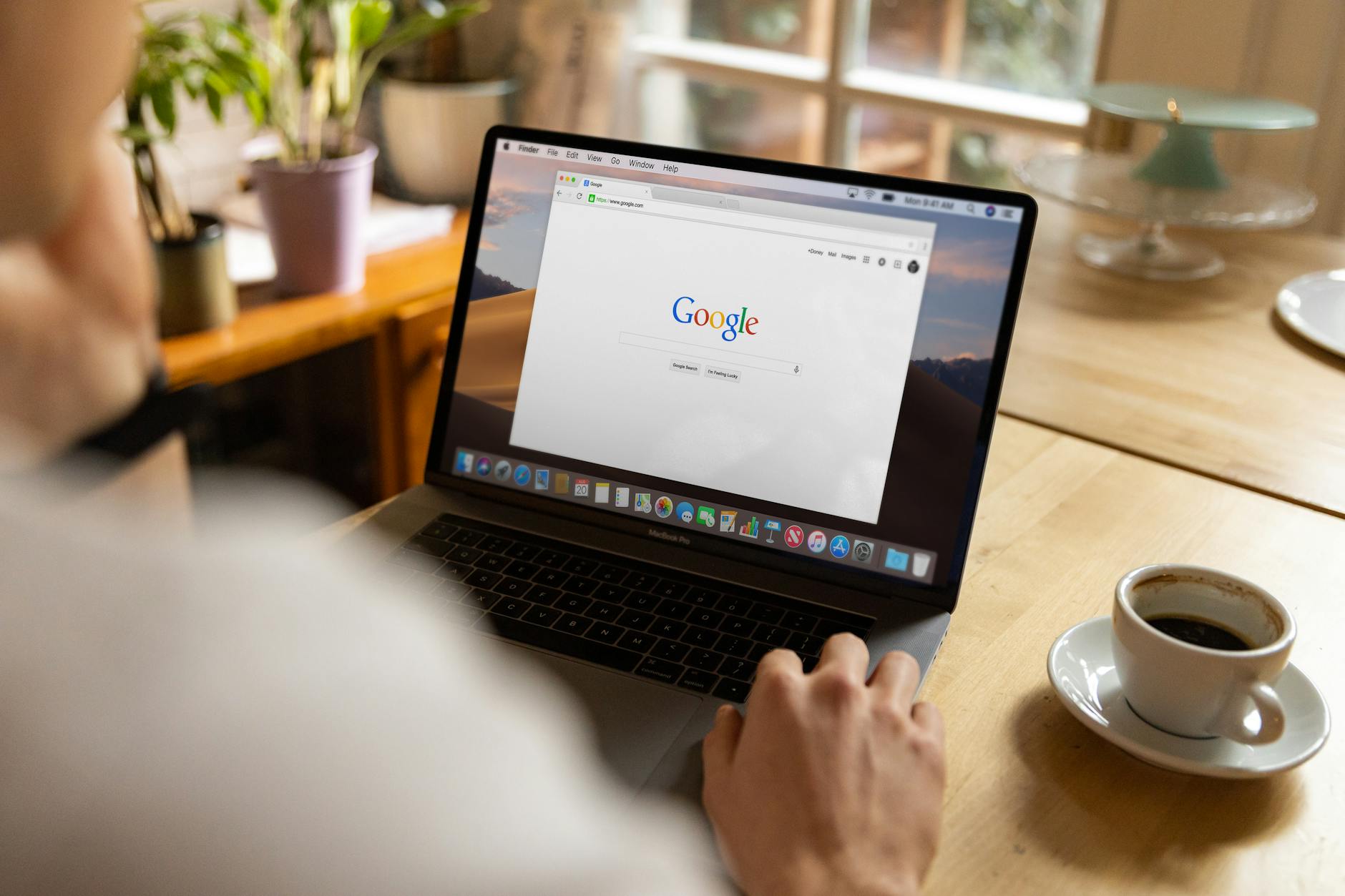
Call me old-fashioned, but I always take a look at the websites. I get sceptical when there aren’t any. For me, a good website should have a simple structure, be intuitive to use, clearly laid out and contain all the necessary information, such as prices, at a glance. For example, the reference to small groups in courses, i.e., a maximum of 4 students per course, is an important indication. If there is no such indication, you should definitely ask this question in person.
Important information I look out for:
- Description of the dive sites with difficulty level
- Division into training and fun dives (already certified divers)
- Short, clear description of the courses with prices (you often look for this point longer)
- Price overview
- Contact information
Why a clear price list matters
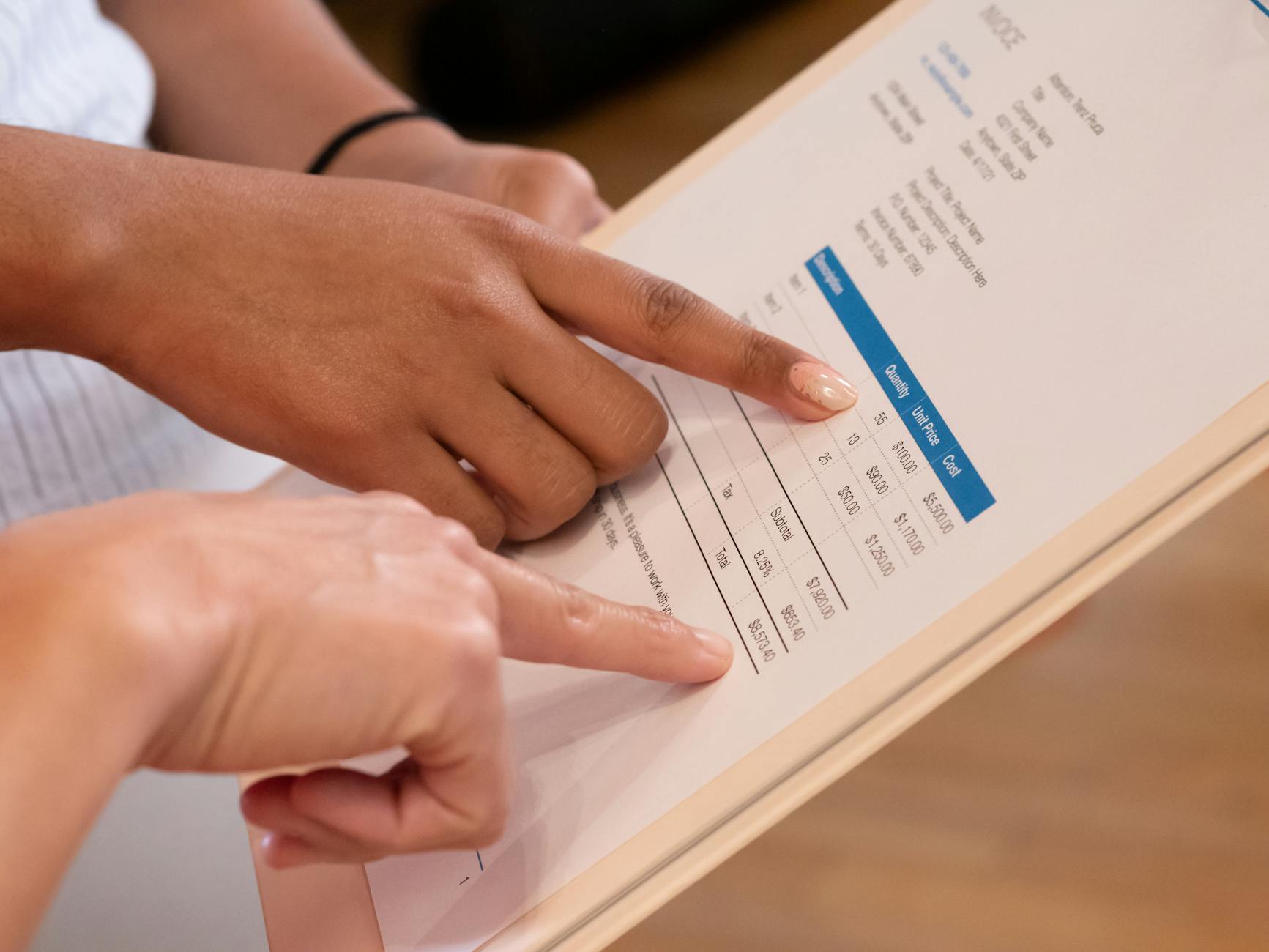
I would like to take a brief look at the price lists here, as it is not easy to create accurate price lists for dive shops. There are too many special features, compositions, and other elements to consider in diving. Some shops exclude the prices for equipment, transportation or certifications. So take a close look to avoid any nasty surprises. There are also combination prices for courses. Here you should briefly check whether these offer an advantage.
Pricelists for dive courses are easy to understand for entry-level students and often offer packages for course combinations. When it comes to professional-level courses, they become more difficult, as they must be customised depending on the experience and training of the students. Some shops offer package prices with various combinations, such as length, with or without accommodation, with or without included fun dives, and with or without certification fees, among others. At this level, in particular, you should pay close attention, do the math, or contact the shop again to ensure you get the right package for you.
Prices for Fun Dives are usually charged per dive or 2 dives. The question is whether equipment, transportation, food, and other expenses are included. Some shops charge a basic price, and the rental price for the equipment is added on top. Some shops offer a total cost reduction if you bring your own complete equipment. You can find options for dive packages or a discount for a certain number of dives onwards. Further away dive sites often have a higher price.
Personally, I’m not a big fan of packages, as you’re then under pressure to do all the dives you’ve booked or you risk losing money. Because often you don’t get any money back if you can’t complete all the dives due to illness or similar reasons.
The importance of easy and honest contact options
Once I have picked out my preferred one, I contact the shop via one of the various channels nowadays – Email, WhatsApp, Google Chat, Instagram, etc. Personally, I still use email as a tool to ask for a lot of information in advance. Everything that messenger/chat tools are for me is for short, timely questions. It is becoming increasingly common for shops to receive detailed inquiries via messaging or chat tools. This makes it much more difficult for the shop to respond with collected information, attachments, etc. To name just one example: No PDF attachments can be sent in Instagram Chat. So no price lists or similar.
From my experience as a dive shop manager, I’ve found that many people don’t thoroughly read responses and end up asking questions that were already answered. Keep in mind that not every dive shop has full-time office staff; often, the manager also teaches and dives. Please consider taking the time to read replies carefully when speaking with a dive shop; we strive to make them clear and complete. As both a diver and a former IT support professional, I value thorough, thoughtful answers. I always appreciate it when someone provides full information, even beyond what I thought to ask.

How the local environment shapes your diving experience
Choosing the right place for a try dive
Introductory diving is a first trial of diving without obtaining certification. You need to practice some basic exercises to feel comfortable and safe underwater.
There are different options here:
- Basic exercises and trial dive in the pool only
- Basic exercises in the pool followed by an introductory dive in the ocean
- Basic exercises in the ocean followed by an introductory dive in the ocean
o from the boat
o from the beach
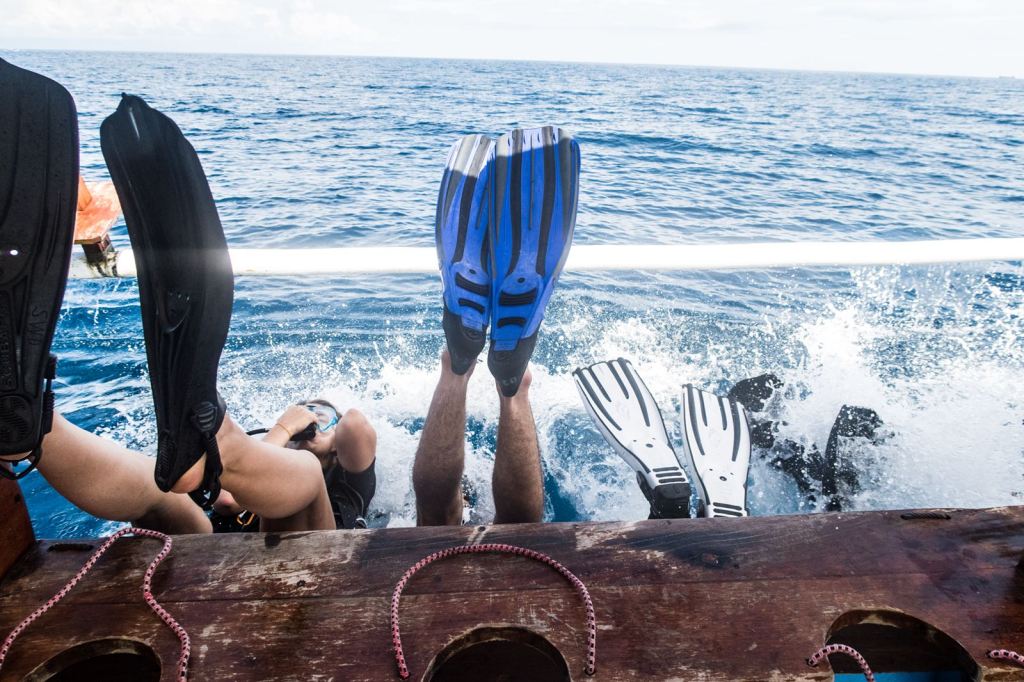
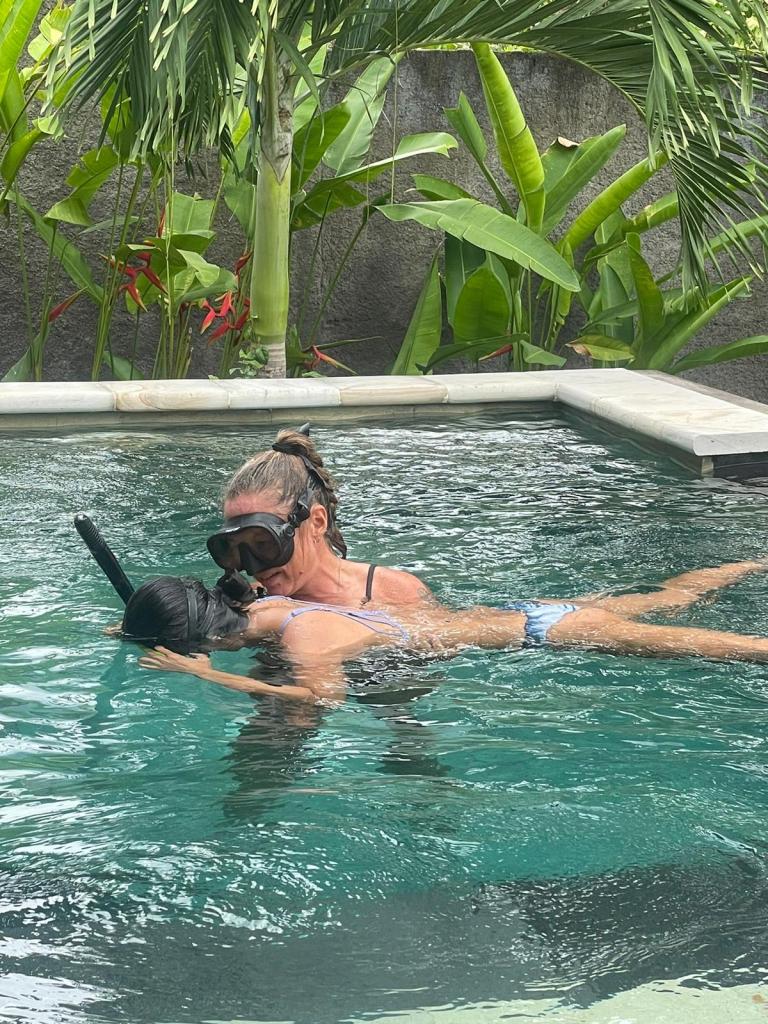
I personally love teaching from the beach, as it allows me to gradually acclimate the students to the depth. In some areas, however, this is not possible. The shops have 2 different approaches here. Either the first underwater exercises are carried out in the pool, followed by a boat dive. Other shops take the students directly onto the boat, where the briefing is carried out, and the first contact with the water occurs when the students jump 1.5 meters from the boat into deep water. For a water rat like me, this is okay, but for someone who is not quite as confident with water, especially deep water, this can be overwhelming.
What to look for when booking a dive course
Especially in the Open Water Course, many basic exercises – comparable to the basic driving exercises required for a driver’s license – need to be performed in shallow water. One significant difference is whether these exercises are carried out in the pool or directly in the sea. Depending on how confident you are with water and deep water, consider which approach is better for you and ask how the shop carries it out.
Many dive shops and instructors prefer to use the pool as they believe it is easier for the students, and fewer students drop out of courses as a result. There is then a transition when moving from the pool to the sea, as the buoyancy control is different in seawater than in the pool. I personally love teaching in the sea from the beach, as my students then train directly in the environment in which they also dive.

The pros and cons of lake diving
Some of you may be considering saving time on vacation by taking the course at home in the lake and then just going diving on vacation. Of course, you can do that. My personal experience with German lakes is that they are cold, shallow, and boring. However, I also know enough divers who enjoy diving in lakes.
There is one thing to bear in mind: The Open Water Diver certificate states that you are allowed to dive to a maximum depth of 18 meters. I have had divers who have done their course in Germany and have not even dived deeper than 6 meters. These divers came to our shop in Bali to dive in the sea. So, three times as deep in salt water instead of fresh water. If you choose this option, be aware of the difference between salt and seawater and ensure that you haven´t just met the minimum standard of “deeper than 5 meters”.

How to recognise true professionalism in a dive shop
What professional behaviour looks like — and why it matters
As diving professionals, we should be role models for all divers and represent the dive shop we´re working for. As in every other job, the behaviour of the team tells a lot about the management and the employer, so spotting positive or negative professional behaviour can help you to find the right dive shop when you walk into one. Or walk away from one when you made a wrong choice.
We have already covered the sales aspect above, which constitutes professional behaviour. In addition to these positive examples are well-given dive briefings, good diving skills, dive safety, taking care of the environment, equipment, and customers, patience, empathy, and the willingness to help, even outside of courses or dives.
Negative examples include (and sadly, I have seen all of them firsthand): being drunk or taking drugs before or during dive trips, being careless with customers, the environment, and equipment, yelling at students, failing to answer questions, and bringing divers into dangerous situations. I have even seen instructors teaching courses while standing at the bottom of the ocean, instead of demonstrating and practising neutral buoyancy to minimise environmental impact.
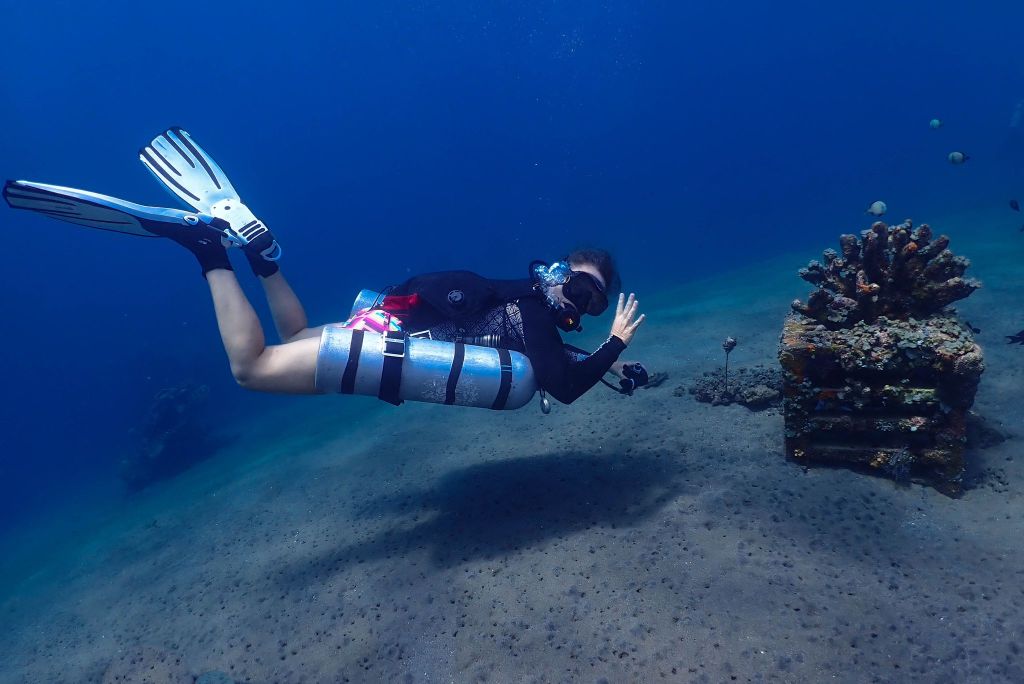
Learning how to dive should be a safe environment, both physically and mentally. No matter where and how much it costs. We should teach/guide with positivity and without pressure. You should not feel pressure, and yelling at customers/students should never be the case. Following the rule “Every diver can abord every dive, at every time, without a reason.” If you find yourself in a situation like this and you don´t feel good, just leave. Rather lose some money than your health.
If you go diving with a shop and the behaviour of the guides or instructors is not professional, please report this to the management. Since the managers are usually in the shop and take care of the entire organisation, it is difficult to monitor the diving behaviour of all employees. From the management’s reaction, you can infer a great deal about the dive shop.
Does one employee represent the whole shop?
No, it doesn´t. Depending on the location, freelancers can be used to fill in for a team member, provide assistance, or replace an instructor who is sick. In such a case, it may be the first time the dive shop is working with this freelancer. We are all humans; we have good and bad days, we make mistakes, and there can be many reasons. If the whole team is unprofessional, it reflects poorly on the way the management or owner handles the dive shop. In such a case, the management will most certainly also react unprofessionally, and you should walk away.

Final thoughts: Ask smart questions, trust your gut
Finding the right dive shop for you is a personal matter and has a lot to do with personal preferences and intuition. Some people want to have the precise planning on vacation that they are used to at home. Others prefer a relaxed, laid-back approach rather than the precise timing, as this suits their vacation mode better.
An appropriate language offer, especially for courses, is also important for many. Every diving instructor should be able to speak English fluently. But some people feel more comfortable with their mother tongue on a course. Others don’t care. In addition, everyone has their own preferences when it comes to dealing with people. Just because I feel comfortable in a shop doesn’t mean that everyone else feels comfortable there too.
In my opinion, the best approach here is to conduct thorough research, combined with your own intuition, possibly a personal recommendation from friends, and to ask the right questions. But even the best preliminary research cannot offer 100% certainty. In such a case, don’t hesitate to address the errors and consider looking for another shop.
Bonus: My little experiment in finding the right Dive Shop
I had made a pre-selection of 3 shops for a friend who wanted to try diving. We had discussed the questions he should ask in advance and agreed that he wouldn’t sign anywhere until we had a debriefing. After we visited all three dive shops, we sat down together and he shared his impressions and intuitive feelings about each of them.
In one shop, the whole sales talk was good, it was about 30 minutes long, everything was explained, the atmosphere was good and all questions were answered. The employee ruined it in the last 5 minutes by trying to rush him to sign without my friend even making it clear whether he had already made up his mind. In the second shop there were no real interest in the customer at all. He didn´t felt seen, heart, there were quick numbers and directly a paper to sign on the table. This dive shop was out of aquation directly. The third dive shop was small, familiar, took time for all the explanations, gave him the feeling to be integrated and not once rushed him to sign.
Shop number three was the shop I would have taken him to, as I had the same feeling with the team and the whole shop. He enjoyed his first time underwater and was very happy. I still tell this story to my students to help them find their fitting dive shop everywhere in the world. I hope that my article has at least helped you with your preliminary research.
 divepromentor.com